„Diversity of Life“
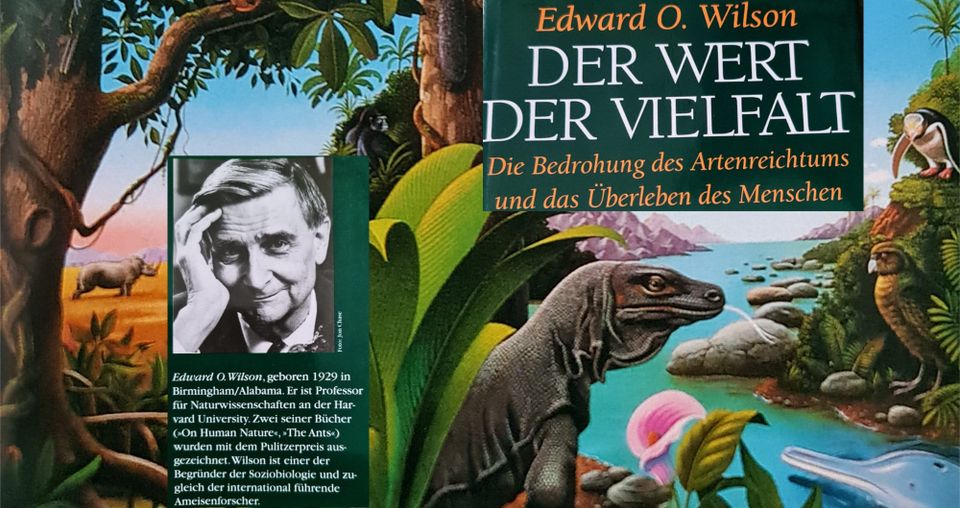
„Biologische Vielfalt — mit einem neuen Fachterminus auch »Biodiversität« genannt — ist der Schlüssel zur Erhaltung der Welt, wie wir sie kennen.
...
Die Bürger demokratischer Gesellschaften glauben vielleicht, ihre Regierung sei durch eine ökologische Version des hippokratischen Eides verpflichtet, jede Maßnahme, die vorsätzlich die Biodiversität gefährdet, zu unterlassen. Doch das allein genügt nicht.
...
Die moralische Verantwortung des Staates für die Bewahrung der Biodiversität gleicht seiner Verantwortung für das öffentliche Gesundheitswesen und die militärische Verteidigung. Über Generationen hinweg übersteigt die Erhaltung von Arten das Leistungsvermögen des Einzelnen wie auch mächtiger privater Institutionen.
...
Das sechste Massensterben der geologischen Zeit ist — dank dem Menschen — in vollem Gange. Die Erde besitzt schließlich eine Kraft, die den Schmelztiegel der Evolution zerbrechen kann.
...
Ziel einer dauerhaften ökologischen Ethik wird es sein, nicht nur die Gesundheit und Freiheit unserer Art, sondern auch den Zugang zu der Welt zu bewahren, in der der menschliche Geist entstanden ist.“
Ausschnitte aus dem Buch „Der Wert der Vielfalt“ von Edward O. Wilson („The Diversity of Life“, 1992, Harvard University Press), meinem ebenso wissenschaftlichen wie auch einfach nur menschlichen Leitstern seit Ende des vergangenen Jahrtausends.
Manche meiner damaligen Kommilitonen im Fachbereich Agrarökologie sind mit ihrem „Dipl.-Ing. agr.“ vielleicht noch in der Hoffnung darauf zu staatlichen Funktionären geworden, die landwirtschaftliche Flächennutzung hierzulande vom übelsten Massenmörder an der Artenvielfalt wenigstens wieder in einen halbwegs gutmütigen Riesen, in dessen Schatten dann doch noch vielerlei kleine Lebewesen ihre jeweilige Nische finden, resozialisieren zu können.
Doch auch schon in jenen Jahren, als die gesellschaftliche Gesamtstimmung vielleicht noch wohlwollender für den Naturschutz war als heute, ist aus vielen guten Absichten oft letztlich nur einfach noch viel mehr Bürokratie geworden.
Trotzdem, es gab und gibt Fortschritte: Pflanzenschutzmittel sind zumeist weniger giftig als noch vor wenigen Jahrzehnten, und ebenso wie ihre Anwendung werden auch schon viele Düngergaben viel öfter an Bedarf bzw. Indikation dosiert, Schutzabstände und Blühstreifen sind automatisiert von der Bearbeitung ausnehmbar usw. — vieles ist schon deutlich besser (bzw. weniger schlimm) geworden.
Als ein seit jeher von Elektronik und Informationstechnik Besessener habe ich mich dafür entschieden, mein Gewicht auf dieser rein technischen Seite in die Waagschale zu werfen (Digitalisierung im Ackerbau, Teilflächenspezifik, „Precision Farming“, „On-Farm Research“ etc.), und manche der vielen Fortschritte in diesem Bereich haben wohl auch ein wenig der Biodiversität helfen können.
Aber der entscheidende Schritt auf diesem Weg steht uns erst noch bevor.
Bis zum heutigen Tag ist nämlich — sowohl hierzulande als auch weltweit — die Tendenz leider ungebrochen, immer ärmere Fruchtfolgen auf immer größeren Schlägen (Bewirtschaftungseinheiten, umgangssprachlich oft „Felder“ genannt) mit immer größeren und schwereren Maschinen zu realisieren.
Hinzu kommt noch ein historisch geradezu vernichtender Kahlschlag an Sorten — und nein: neue Hybridsorten wiegen diesen Verlust keineswegs auf.
Doch wenn es in erster Linie um Lebensräume für diverse Arten geht, ist das Kernproblem auch primär räumlicher Natur.
Worauf es jetzt vor allem ankommt, ist die Nutzung des technischen Fortschritts für eine wesentlich kleinräumigere Landbewirtschaftung.
Da es illusionär — oder gar totalitär — wäre, dies mit einer Vervielfachung menschlicher Arbeitskräfte in der Landwirtschaft erreichen zu wollen, muss die Lösung eine maschinelle sein.
Zum Glück sind hierfür bereits jetzt alle technischen Voraussetzungen gegeben.
Ich selbst habe in den letzten Jahren insbesondere in den Themenfeldern der hochpräzisen GNSS-Positionierung, der dezentralen Informationsverarbeitung mit sogenannten Mikrocontrollern sowie der mobilen Stromversorgung gearbeitet, mich darüber hinaus aber stets auch mit größter Freude über die Fortschritte sowohl in der Sensorik (Multispektraloptik, Mikrowellen- bzw. Dopplersensorik etc. bis hin zum maschinellen Lernen für die Objekterkennung bzw. -klassifizierung im Nahumfeld) als auch den Aktoren (Motorsteuerungen, Laser* etc.) informiert und weiß daher recht gut, dass mittlerweile eigentlich nur noch eine Zutat zum Durchbruch fehlt:
„Durch Deutschland muss ein Ruck gehen. Wir müssen Abschied nehmen von liebgewordenen Besitzständen.“
(Bundespräsident Roman Herzog, Berliner Rede 1997)
*: Konkretes Beispiel: Vor weniger als 20 Jahren war ich (eher zufällig) auch an einem Projekt mit mehreren Entwicklungspartnern beteiligt, bei dem sich die technischen Hürden für eine teilflächenspezifische Herbizidausbringung als Echtzeitanwendung (also ohne eine mit zeitlichem Abstand vorproduzierte Sollwertverteilung) zum Teil noch äußerst beschwerlich zeigten. Heute hingegen ist es überhaupt keine Zukunftsmusik mehr, eine relativ kleine autonome Maschine über die Kulturpflanzen fahren zu lassen, die auch 'offline' und mit gar nicht mehr allzu teurer Rechentechnik erstaunlich zuverlässig die Beikräuter im Bestand erkennt und diese dann auch sogleich mit einem gezielten Laserstrahl thermisch eliminiert — oder sogar nur hinreichend in ihrer Konkurrenzfähigkeit schwächt, wobei der Laser mit deutlich weniger Leistung und/oder Einwirkzeit je Zielpflanze betrieben werden kann — und somit tatsächlich bereits ganz ohne Herbizide das Ziel erreicht, die jeweilige Feldfrucht auf ihrer Anbaufläche vor übermäßiger pflanzlicher Konkurrenz zu schützen (was leider oft unverzichtbar ist und bleibt — ob nun chemisch, mechanisch oder eben thermisch).
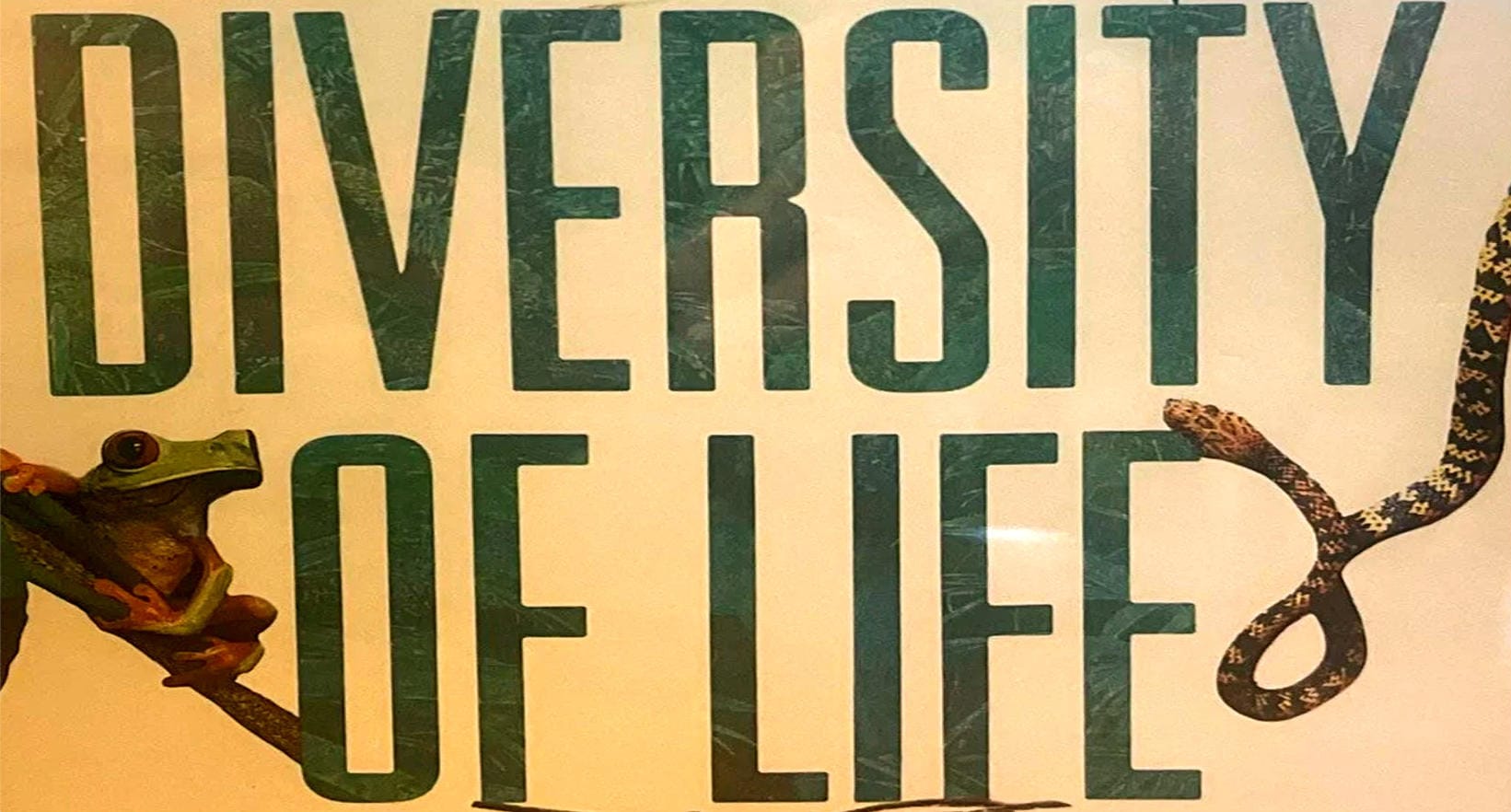
„If any date can be fixed for the beginning of modern biodiversity studies, it would likely be September 21, 1986, when a National Forum on BioDiversity was held in Washington, D.C. Sponsored jointly by the National Research Council and the Smithsonian Institution, the three day meeting brought together more than sixty leading biologists, economists, agricultural experts, philosophers, and representatives of assistance and leading agencies.
When the contributions of this eclectic assemblage were published two years later under the title BioDiversity, the book became, by scientific publication standards at least, an international bestseller.
As its editor, I had already adopted in other writings the unified word “biodiversity,” and that is where the term settled.
The material covered in BioDiversity, which was focused primarily on biology and written for a broad readership, became the subject of the present book, The Diversity of Life, first published in 1992.
Biodiversity, short for biological diversity, is defined as the totality of inherited variation in all the organisms of a selected area. The area can be a woodland or a system of forests or a pond or an ocean.
It can be a political unit, say a state or a country.
Or it can be the whole world.
Once the location is selected, researchers study biodiversity at one or the other or all three levels of biological organization: first ecosystems, such as a forest patch or a pond; then, next down, all the species, from microorganisms to trees and megafauna; and finally, at the third and lowest level, the genes that prescribe the traits of the species that make up the ecosystems.
It may well be asked at this point, what is so new about “modern” biodiversity studies?
After all, record of humanity’s attempt to identify all species of organisms dates back to Aristotle. The formalization of taxonomy to accomplish that goal was the consuming interest of Carl Linnaeus, one of the most influential scientists of the eighteenth century. Further, the discovery of the origin of species dates to Charles Darwin. The process of speciation and the multiplication of species, as opposed to the change of individual species through time, had been worked out by Alfred Russel Wallace by 1865, and elaborated to the level of chromosomes and genes during the first half of the twentieth century.
The same can be said of biogeography, the mapping of species, and the deduction of phylogenies begun by Wallace and Lamarck — also in the nineteenth century.
The full maturation of biodiversity studies, however, can be dated to the era begun in the 1980s, and is based upon two new developments. The first is the reigniting of the great Linnaean enterprise, based upon the recognition that despite more than two centuries of taxonomic labor, most of the biodiversity of the world remains unknown.
The second development is the extension of the boundary of biodiversity studies in order to unite them with other branches of science and technology.
To say that the fauna and flora of the world remains largely unknown is no exaggeration.
At the present time (2010), the numbers of known species of all kinds of organisms, defined as those discovered, characterized, and given a scientific name, is approximately 1.9 million.
The actual number in existence on Earth has been variously estimated to be between 5 and more than 50 million; if microorganisms are added, the number would have to be increased dramatically, albeit to an entirely unknown degree.
In 2006–2007, approximately 18,000 new species of all kinds of non microbial organisms were being described each year.
Of these species, about 75 percent were invertebrates, 7 percent were vertebrates, and 11 percent were plants.¹
If we accept 10 million species as the total global number, a figure most biodiversity experts find conservative, it follows that at the present rate of species discovery it will be half another millennium, well into the twenty seventh century, before the census of life on Earth is complete.
Nor are the still largely unknown groups of organisms trivial in importance to the rest of life, including our own.
The 100,000 species of fungithus far discovered and named are but a tiny fraction of the roughly 1.5 million estimated to exist.
Fewer than 25,000 species of nematodes, tiny wormlike creatures considered the most abundant animals on the planet, are known, whereas somewhat less than a half million have been estimated to await discovery.
Some 14,000 known species of ants, the most abundant and ecologically dominant insects, probably represent no more than half of those in existence.
The same rough figure — half or less — applies to the world’s beetles and flies.
Science is at the dawn of a new age in the discovery of biodiversity.
Yet it is clear that a much greater effort is needed from humanity if we wish to continue struggling along on a little-known planet.
The technology exists to speed the effort to map the living world. DNA sequencing is now rapid enough for the mapping of complete genomes in days or even (in bacteria, for example) hours.
Metagenomics, the sampling of DNA from assemblages of species in selected ecosystems, allows “quick and dirty” estimates of the amount of microbial diversity in soil and water.
Once species of all kinds are separated and described by diagnostic traits, they can be quickly identified by DNA barcoding — the reading of selected parts of the genome.
As information accumulates, it is already being fed into databases available through single access on command.
The most encompassing is the Encyclopedia of Life (http://www.eol.org), which was begun in 2005 and is well on its way to recording and making immediately accessible everything known about every species of organism, with updates on already known species and information on new species as they are discovered.
The first round of taxonomic discovery and archiving is only the beginning.
Of the known species of organisms, only a very small fraction of the species, approximately 3 percent, have been studied well enough to evaluate their conservation status — whether they are abundant and widespread enough to be stable and safe, or liable in any degree to extinction.
The 5,490 species of mammals and 9,998 species of birds thus far discovered have all been evaluated in this manner, but this knowledge is more than counterbalanced by our ignorance of plants (3.9 percent of 282,000 known species) and invertebrate animals (0.6 percent of 1.3 million species).²
Every species on Earth has been adapted by thousands to millions of years of evolution to the particularities of the environment in which it lives.
Its genotype is different from that of all other species.
The traits its genes prescribe are also unique, in biochemistry, anatomy, physiology, and behavior, and in the way it interacts with other species and serves the ecosystem it inhabits.
Each species, in short, is a living encyclopedia of how to survive on planet Earth.
Humanity is in the very early stages of acquiring the knowledge biodiversity offers us.
The impact of biodiversity studies on medicine, biotechnology, and agriculture is already substantial, and will in time become enormous.
As the reach of general biology at all levels grows, the role of biodiversity studies will become disproportionately large.
Its importance is foreordained by the fact that future biology as a whole is settling upon two laws.
The first is that all living processes are ultimately obedient to the laws of physics and chemistry.
This provides the foundation of molecular, cellular, and developmental biology.
The second law is that all living processes have originated through evolution by natural selection.
That perception is the foundation of evolutionary and environmental biology, much of which is devoted to biodiversity studies.
In time, I believe, biology will be seen as a discipline that advances in coordinated manner along these two fronts.“
¹ : These estimates are from Arthur D. Chapman, ed., “Numbers of Living Species in Australia and the World”, 2nd ed. (Australian Biodiversity Information Services, Department of the Environment, Water, Heritage and the Arts, Australia, September 2009).
² : These estimates are from S. N. Stuart, E. O. Wilson, J. A. McNeely, R. A. Mittermeier, and J. P. Rodríguez, “The barometer of life”, Science 328:177 (April 2010).
Edward O. Wilson: „Preface to the 2010 Printing“ (05/2010)